Every parent knows that a well-structured preschool daily routine can be the secret sauce to a happy, thriving child. Picture this: a world where kids transition smoothly from circle time to snack time without a meltdown. Sounds like a fairy tale? It doesn’t have to be!
Importance of a Preschool Daily Routine
A structured daily routine in preschool fosters a sense of security. Children thrive when they know what to expect throughout the day. Smoother transitions between activities help minimize behavioral issues. Organized schedules enhance children’s ability to focus and learn.
Predictability in routines creates a calming environment. When children anticipate activities, such as circle time or snack time, they engage more readily. Consistency within a routine helps develop self-discipline. Children learn to manage their time effectively and understand the concept of past, present, and future.
Flexibility remains crucial within structured routines. Adapting schedules to meet individual needs allows children to feel valued. Social interactions during structured playtime enhance communication skills. Engaging with peers during creative activities builds collaboration and teamwork.
In addition to emotional benefits, cognitive development hinges on routines. Daily schedules that include learning activities stimulate critical thinking. Incorporating sensory play within routines fosters creativity and problem-solving capabilities. Language skills improve with consistent exposure to new vocabulary during storytelling sessions.
Parental involvement strengthens the importance of a routine. When parents reinforce daily schedules at home, it enhances children’s understanding. Building connections between home and preschool routines promotes overall stability. With a well-defined routine, children gain confidence as they navigate their day.
Implementing a daily routine benefits teachers as well. Educators observe improved classroom management and reduced stress levels. Well-organized schedules equip teachers to maximize teaching opportunities. Overall, a daily routine in preschool creates a positive foundation for life-long learning and development.
Key Components of a Preschool Daily Routine
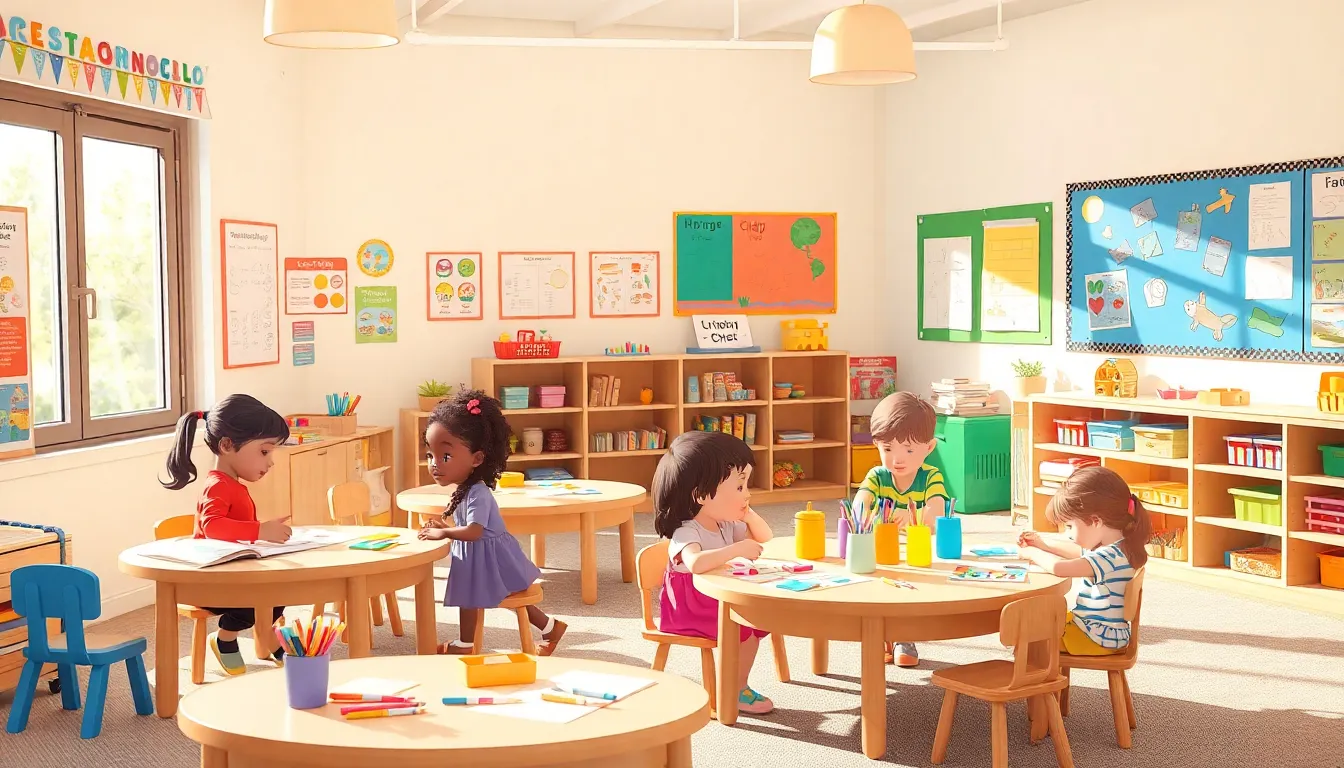
A structured daily routine in preschool involves several key components that facilitate smooth transitions and support children’s development.
Morning Activities
Morning activities kick off the day with energy and excitement. Children gather for circle time, where they learn about the day’s schedule and weather. Engage in singing and storytelling to promote language development and social skills. Following this, interactive activities, such as arts and crafts, prepare them for more focused learning. Morning routines help establish a positive mindset, encouraging children to participate actively.
Learning Time
Learning time involves focused, educational activities that target various development areas. Lessons cover subjects like math, science, and literacy through hands-on experiences. Group projects cultivate teamwork and foster communication skills among peers. It’s crucial for teachers to employ diverse teaching methods to cater to different learning styles. Structured learning helps develop cognitive abilities while keeping children engaged and motivated.
Snack and Free Play
Snack and free play periods provide essential breaks for socialization and exploration. Snack time encourages healthy eating habits, as children enjoy nutritious options while interacting. Afterward, free play allows them to choose activities, fostering independence and creativity. This unstructured time helps children refine problem-solving skills and build relationships with classmates. It’s important to balance guided and independent play to support overall development.
Benefits of a Structured Routine
Structured routines significantly support children’s development in preschool. They provide predictability, which is essential for effective learning and social interaction.
Enhances Learning
Learning experiences thrive in a structured environment. Children benefit from consistent daily schedules that integrate various educational activities, including math, science, and literacy. Familiarity with the rhythm of the day helps children focus better. Engaging in activities such as storytelling and group discussions fosters cognitive engagement. When teachers introduce new vocabulary during these activities, children effortlessly weave it into their everyday interactions. Additionally, a routine encourages self-discipline as children learn to anticipate transitions, enhancing their ability to concentrate and absorb information.
Promotes Social Skills
Social skills flourish within a structured routine. Interaction during scheduled activities, such as free play and group learning, provides children with ample opportunities to communicate and collaborate. Sharing toys or working together on projects fosters teamwork and negotiation skills. Children develop empathy and understanding as they navigate social situations. Routine social interactions also establish a sense of community within the classroom. Additionally, structured playtime nurtures independence, as children learn to express their feelings and establish friendships in a safe environment.
Tips for Implementing a Preschool Daily Routine
Implementing a preschool daily routine involves strategies that enhance structure and engagement for children. These tips focus on creating an effective and enjoyable experience.
Consistency is Key
Establishing a consistent schedule fosters a sense of security for children. Routines help them anticipate transitions, which minimizes anxiety and unpredictability. Regularly scheduled activities, such as morning circle time or snack breaks, reinforce the daily flow. Consistent timings for key events lead to better focus and engagement during learning activities. Teachers can motivate children through repetition, allowing them to master skills over time. Familiarity with routines enhances comfort and builds trust within the preschool environment. Families can support this consistency by reinforcing routines at home, strengthening children’s understanding of expectations.
Involve Children in the Process
Engaging children in their daily routine promotes ownership and excitement. Encouraging them to participate in planning helps develop their decision-making skills. Simple tasks, such as choosing activities for free play or helping set the table for snack time, foster independence and responsibility. Questions about their preferences create a dialogue, allowing children to feel heard and valued. This participation builds a connection between children and the routine, making them more likely to engage actively. Creating visual schedules or charts with their input reinforces their understanding and engagement with the routine.
A well-structured daily routine in preschool lays the groundwork for children’s emotional and cognitive development. It creates a stable environment where kids can thrive and learn effectively. By knowing what to expect throughout the day, children gain confidence and self-discipline.
Flexibility within the routine allows teachers to cater to individual needs while promoting social interactions. This balance nurtures essential skills like communication and problem-solving, preparing children for future challenges.
Parental involvement further reinforces these routines, ensuring consistency between home and school. As children engage in structured activities, they develop a sense of community and belonging. Ultimately, a thoughtful daily routine not only benefits children but also supports teachers in creating a positive learning atmosphere.