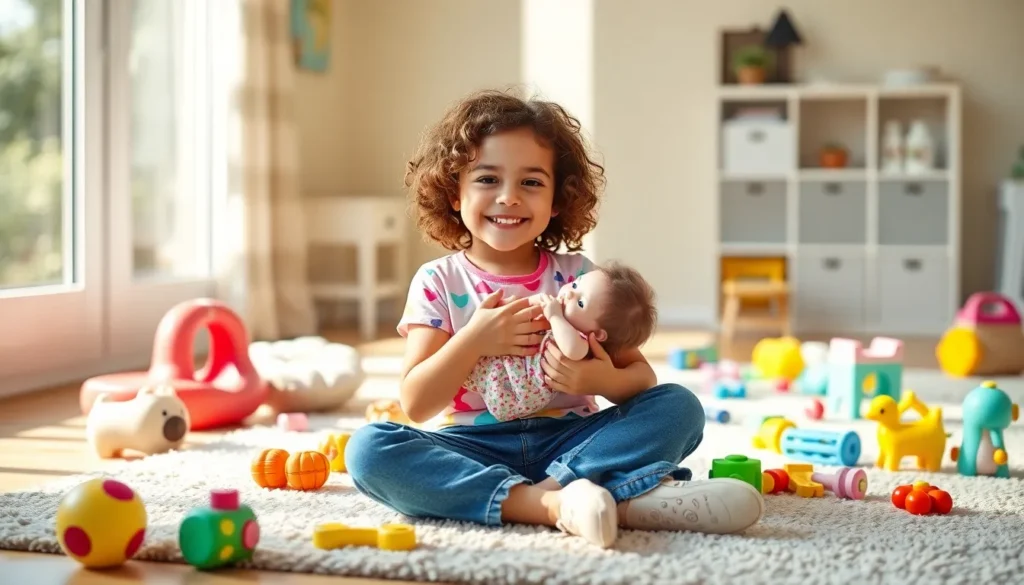
When it comes to child development, baby dolls are more than just cute companions—they’re tiny teachers in disguise. These cuddly toys offer a world of imaginative play that helps kids learn essential life skills. From nurturing instincts to social interactions, baby dolls are like little life coaches guiding children through the wild adventure of growing up.
Imagine a toddler cradling a doll, practicing their best parenting skills while simultaneously plotting the next big tea party. It’s not just play; it’s a crash course in empathy, responsibility, and creativity. Plus, who wouldn’t want to witness the hilarious moments when a child tries to change a diaper on a doll that clearly doesn’t need it? With every giggle and faux pas, these baby dolls become invaluable tools in shaping well-rounded little humans. So, let’s dive into the delightful world of baby dolls and discover how they can boost child development in ways that are both fun and impactful.
Understanding Child Development
Child development encompasses various stages that shape a child’s physical, emotional, and cognitive growth. Baby dolls play a vital role in this process, serving as tools that enhance learning.
Key Stages of Development
Infancy marks the beginning of significant growth, with babies exploring through sensory experiences. Toddlers engage in parallel play, where toys like baby dolls foster interaction. Preschool years introduce imaginative play, allowing children to mimic real-life scenarios. Each stage builds upon the previous one, promoting social skills and emotional understanding. From nurturing their dolls to creating stories, children develop empathy and responsibility. The role of baby dolls in these stages emphasizes their importance as developmental tools.
Importance of Play in Development
Play serves as a crucial element in childhood development. Engaging with baby dolls encourages creativity and problem-solving. Through imaginative scenarios, children learn to navigate social situations. Expressing emotions while caring for their dolls fosters emotional intelligence. Developmental experts stress that playtime contributes significantly to life skills and cognitive abilities. Baby dolls help children practice real-world interactions in a safe environment. Overall, play enriches learning and nurtures well-rounded individuals.
The Role of Baby Dolls in Child Development
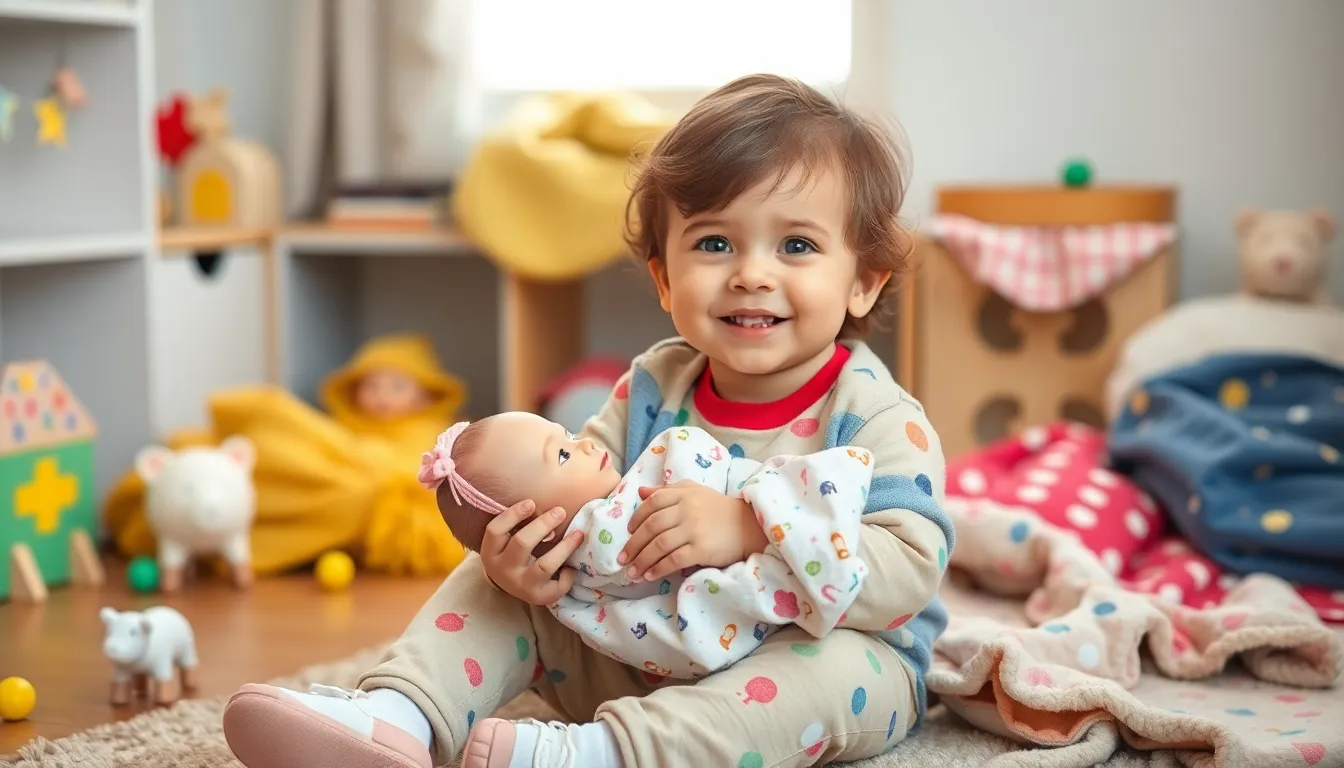
Baby dolls serve as essential tools in nurturing a child’s growth. They significantly contribute to emotional and cognitive development during key stages of childhood.
Emotional Development
Baby dolls promote emotional development by providing children a safe outlet for expressing feelings. Through role-playing, children explore various emotions, enhancing their empathy toward others. Engaging in nurturing behaviors, such as feeding or comforting a doll, allows children to practice responsibility. Children learn to recognize and respond to different emotional situations, enhancing their emotional intelligence. Research indicates that this practice fosters stronger social connections, vital for building friendships. A child’s ability to imitate real-life caregiving improves their understanding of love and compassion.
Cognitive Development
Cognitive development flourishes when children play with baby dolls, stimulating their imagination and problem-solving skills. Children often create diverse scenarios, enhancing their creativity as they invent stories. Engaging in pretend play encourages language skills, allowing them to articulate thoughts and feelings clearly. Presentation-based play with baby dolls helps improve organizational skills as they learn to arrange scenarios methodically. Additionally, playtime fosters critical thinking as children navigate various social interactions. Experts assert that these activities strengthen a child’s cognitive abilities, laying a foundation for future learning challenges.
Benefits of Using Child Development Baby Dolls
Child development baby dolls offer numerous advantages in a child’s growth journey. These dolls serve as interactive tools that enhance various skills essential for development.
Social Skills Enhancement
Social skills improve significantly through baby doll play. Children engage in role-playing scenarios, facilitating communication and cooperation with peers. By practicing parent-child dynamics, they learn the importance of sharing and empathy. Observing how different characters react to situations fosters respect for emotions. Peer interactions, rooted in doll play, build a foundation for healthy relationships. Ultimately, utilizing baby dolls enables children to navigate complex social environments effectively.
Creativity and Imagination
Creativity flourishes during imaginative play with baby dolls. Kids invent scenarios, bringing characters to life and exploring diverse narratives. They experiment with different roles, enhancing storytelling capabilities. Creating elaborate settings allows for problem-solving as children navigate new challenges. Language skills develop organically as they articulate thoughts and ideas while playing. This engagement nurtures a rich imaginative landscape, promoting deeper cognitive connections. Overall, baby dolls serve as catalysts for creative exploration, empowering children to express themselves authentically.
Choosing the Right Baby Doll
Selecting the right baby doll involves considering factors that support a child’s developmental needs. Parents should reflect on specific features that enhance play experiences.
Features to Consider
Examine safety materials used in the doll’s construction. Durable fabrics ensure longevity and safety during play. Look for engaging features such as realistic appearances, movable limbs, and interactive sounds. These elements stimulate creative scenarios and enhance role-play experiences. Size also plays a key role; a doll that fits comfortably in a child’s arms encourages nurturing behavior. Additionally, some dolls come with accessories that enrich imaginative play, offering tools like bottles, blankets, and toys.
Age-Appropriate Options
A variety of age-appropriate dolls exists for different developmental stages. Infants benefit from soft, sensory dolls that feature varied textures and colors. Toddlers enjoy dolls that promote role-play, such as those that can be fed or dressed. Preschoolers thrive with more complex dolls that inspire storytelling. These options foster creativity and enhance emotional connection. It’s crucial to choose dolls that align with a child’s interests and maturity level, ensuring a positive and engaging playtime experience.
Baby dolls are invaluable companions in a child’s developmental journey. They foster essential skills like empathy and creativity while providing a safe space for emotional expression. Through imaginative play, children not only enhance their social abilities but also strengthen cognitive skills that are crucial for their growth.
Selecting the right baby doll can further enrich this experience, ensuring it meets the child’s developmental stage and interests. As children engage with these dolls, they navigate real-life scenarios that prepare them for future interactions. Ultimately, baby dolls serve as more than just toys; they’re vital tools that nurture well-rounded individuals ready to embrace the world.